

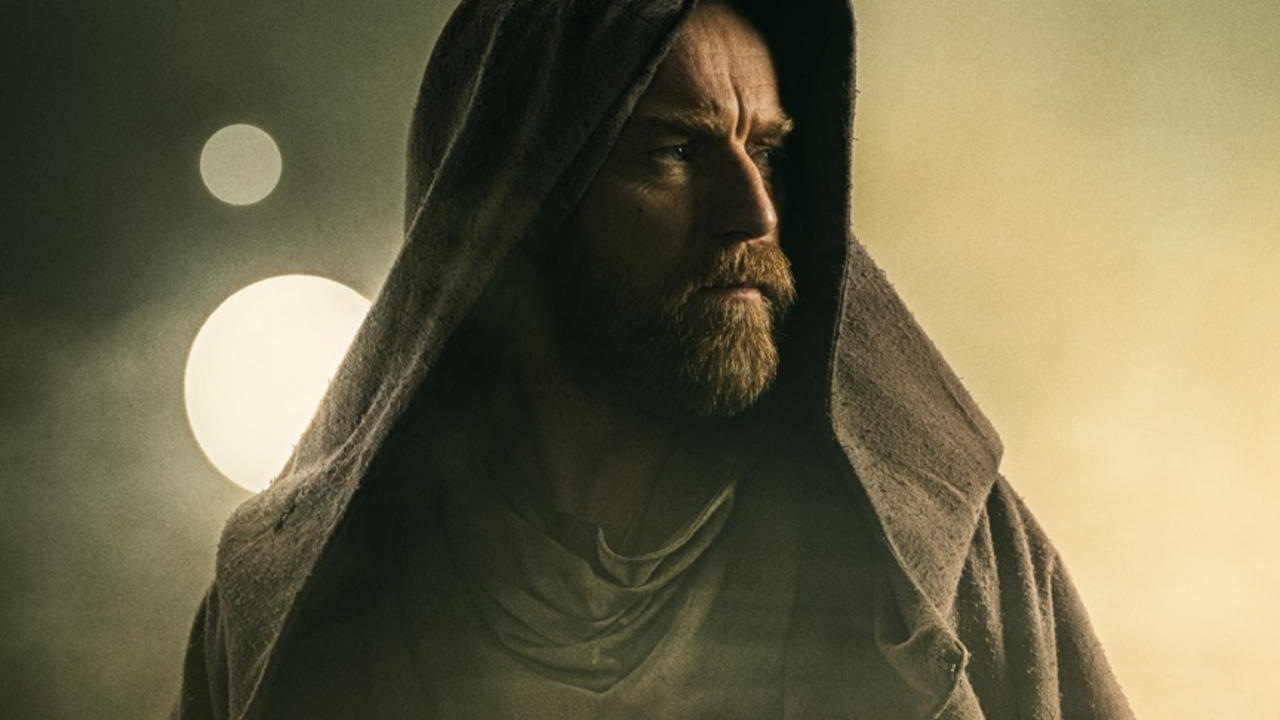
Disney+’s Obi-Wan Kenobi is just a stone’s throw away and is probably the most anticipated Star Wars content since 1999’s The Phantom Menace. Even the sheer quantity of Star Wars in the last two decades has done nothing to reduce the rabid anticipation us fans have specifically for this one upcoming series. And it’s easy to understand why…
It’s ‘cause Obi-Wan is the best damn character in the Star Wars universe.
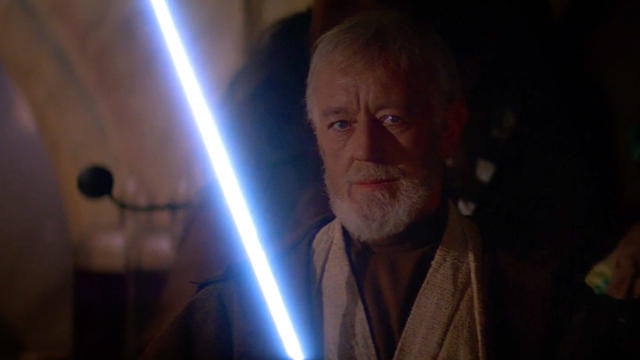
To be clear about my biases, I’m generally a fan of the mentor trope in fantasy and genre fiction from Gandalf (the Grey) to Sirius Black to Ron Swanson. When I say Obi-Wan’s my favourite character, I don’t just mean the Prequel Trilogy edition of the character or after. If anything, while Ewan McGregor’s portrayal of the character may be the best, it is old Ben that first hooked me to the Star Wars universe. So, while my inclination to this character type may make it seem like my preference for Obi-Wan Kenobi over all other Star Wars characters is unfair, it really isn’t–and I believe the upcoming Disney+ series may prove why for some of these following reasons.
Obi-Wan has become Star Wars.
Yes, contentious and not entirely true… but from a certain point of view, while Star Wars has evolved and can mean many different things to its wide audience, Obi-Wan has become more than just a key player in the Skywalker Saga, rivalling even the significance of the family after whom the bulk of the series is named.
From being the driving factor of the launch and end of the Clone Wars, to being the invisible guardian and mentor to Luke Skywalker (and being the guy who pretty much made Darth Vader), Obi-Wan’s universe-affecting actions are of greater influence than even most protagonists, let alone mentors. Of course, a lot of these are of greater visibility in The Clone Wars (2008), and even more so in the older pre-Disney-era canon, but it remains that much of the first two trilogies’ events at least involve Obi-Wan even if they’re not directly instigated by his actions.
But, more importantly, Obi-Wan has also become the victim of his actions by the time Revenge of the Sith rolls around, and has occupied the unique position–often reserved for protagonists–of being both catalyst and casualty of the story.
Padawan, knight, or hermit–Obi-Wan is an indicator of the galaxy at large.
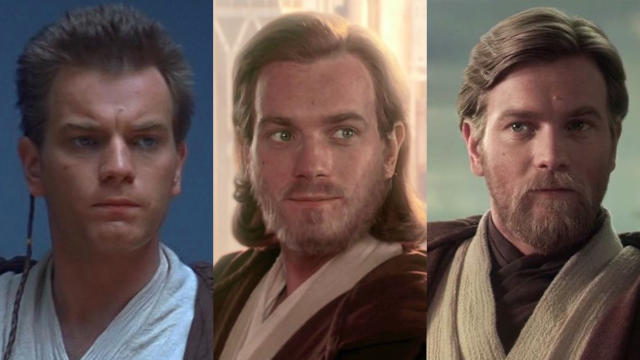
Be it intentional or not, Obi-Wan’s portrayal throughout the series has often reflected the state of storytelling in the galaxy far, far away.
When we first see him in 1977’s Star Wars, he’s a tired and wizened recluse beaten up by both history and the situation of the Empire-ruled galaxy. Much like the point of the movie (and its eventual title), he regains hope through the possibility of Luke Skywalker’s involvement in the Rebel Alliance.
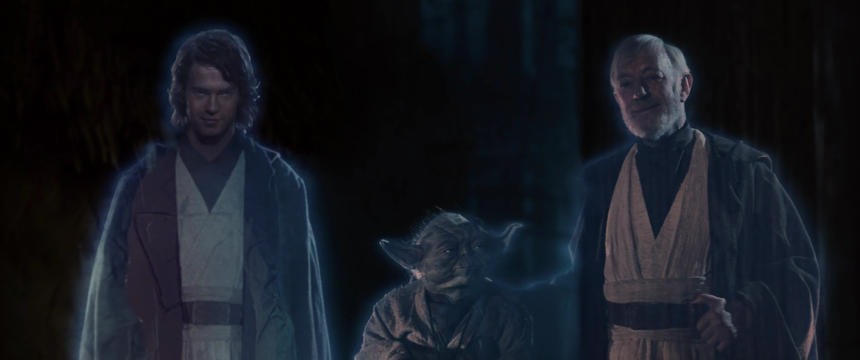
In this far-fetched analogy, Obi-Wan’s final living appearance in the Original Trilogy can be interpreted as the actual death of the Republic (as seen in the prequels), and a necessary sacrifice for the New Republic to rise from the ashes. All of his appearances thereafter are accompanied by nuggets of exposition dating back to the decades before A New Hope. And just as he’d appeared alone, representing the ghost of the Republic (pun intended, of course), he fades away with Anakin and Yoda, the last symbols of the galaxy’s past, by the end of the trilogy.
With the introduction of a younger, fresh-faced Obi-Wan, the Star Wars movies boldly go where they haven’t gone before: to the shinier, more futuristic tones of classic sci-fi. While Star Wars movies are famously not sci-fi, the prequels took a stab at fitting more squarely into the genre with shiny vehicles, biological explanations for magic, and straight up using sci-fi-like technology to pretty much render every single thing that wasn’t a human(oid).
And, throughout the course of the Prequel Trilogy, be they the Episodes or The Clone Wars, Obi-Wan’s increasing maturity and internal conflict is more clearly displayed in the sudden plunging of the Republic in outright war, followed by the decades of civil unrest across the Galactic Empire.
While there’s never been any doubt as to who the protagonists of the Prequel and Original Trilogies are, Obi-Wan’s (probably) inadvertent role as the surrogate representation of the state of Star Wars’ storytelling may have been a big reason why he’s become as relatable as he is.
Also ‘cause Ewan McGregor’s so damn beautiful.
Disney+ needs a Star Wars anchor show.
No, The Mandalorian just doesn’t cut it. As cool as the show is, being largely occupied with great writing and moments of decent decision-making, the entire foundation of the show is built on fan service. It is somehow more referential to Lucas’ work than even the prequels were and, no, that’s not a good thing.
Over the last two (and a half) seasons The Mandalorian has just found ways to shove fan service onto the screen–at this point, the series is literally about a Mandalorian Jedi. It’s like it’s being written by Knights of the Old Republic fanboys on Reddit.
And, yes, I’ve enjoyed just about every moment of it (not so much the hijacking of The Book of Boba Fett, though).
But, and let’s be honest here, it’s done absolutely nothing for the universe at large. Much like little trivia pieces about how some rando background character on Tatooine is really a badass Jedi (don’t hate, I love Master Vos, too), The Mandalorian is essentially a serialised Easter egg in what’s essentially the distant past of the Star Wars universe.

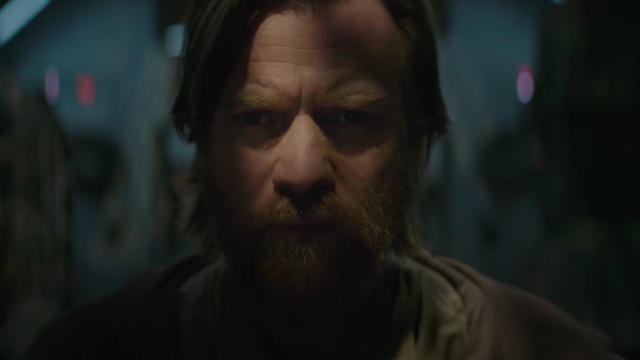
And so might Obi-Wan Kenobi. But where The Mandalorian drifts between setting up cool face-offs between fan favourite animated characters come to life and actually exploring the galaxy, Obi-Wan Kenobi could possibly walk the line between retreading familiar paths and giving these smaller scale stories some purpose again. Essentially, while The Mandalorian (and The Book of Boba Fett) were great ways of portraying the impact that Luke Skywalker and the Rebel Alliance have had, Obi-Wan Kenobi could be the much needed reminder that the heart of Star Wars lies in the struggle against the oppression of a fascist regime.
A little depressing, but the unfortunate truth.
As director Deborah Chow best put it
… obviously [Obi-Wan Kenobi’s] a different tone, but something like Joker or Logan where, you know, you take one character out of a big franchise and then you really have the time and you go a lot deeper with the character.
And this is really where Obi-Wan Kenobi just might fit into the greater Star Wars puzzle, filling a gap that has only grown more prominent in the past decade: character-driven pieces that are not necessarily divorced from the franchise as a whole.
But, most importantly, Obi-Wan Kenobi will need no continuation.
Not to say we wouldn’t want more, but with Obi-Wan’s tale having already culminated, and with this entry set so close to A New Hope, this series can function as an effective one and done, not only appeasing a decade and half’s worth of fan-driven hope, but also setting the precedent for more galaxy-impacting shows which are nevertheless more focused on being character-driven.
And while there are only six episodes for us to get all the Obi-Wan we can, perhaps this same approach could assist in the stories of more viable long-running shows such as the upcoming Ahsoka series.