

I love a good horror movie, though I’m no buff when it comes to the genre. That’s why, going into this movie, I didn’t know who Lee Cronin was, nor that its producer James Wan is the man behind the Saw, Insidious, and The Conjuring series.
But if I had known, I would’ve hoped (to God!) to see a lot more The Conjuring and a lot less Saw (curse my hypothetical naivety).
I was pretty optimistic walking into the cinema for this one. I mean, when was the last time we got an actually scary movie about Egyptian mummies? And this one has a scary child as the mummy? Sign me up! It seemed like a genuinely interesting premise and a fresh take on the horror sub-genre.
Sadly, I would, by the end of film, decide that my optimism was sorely misplaced. Despite its strengths, Lee Cronin’s The Mummy ultimately fails to bring anything especially novel or memorable to the table (at least, not anything you’ll want to remember).
First off, the movie starts off slow. That much I can forgive—it did well to endear us to the characters to some degree. The first half hour of the movie is tolerable, and not exactly boring per se, but it’s a notably long stretch of exposition that could have been peppered with a lot more elements of horror.
Here’s the good news: When the actual “horror” part of the film finally begins in earnest, it gets good!
One of the film’s strong points is the terrific job done by the makeup and effects artists. Every monster from previous The Mummy movies had a unique look. 1932’s Imhotep was Frankensteinian, 1999’s Imhotep was a terrifying screaming zombie (before he got his skin back), and the Tom Cruise one was an undead supermodel for some reason.
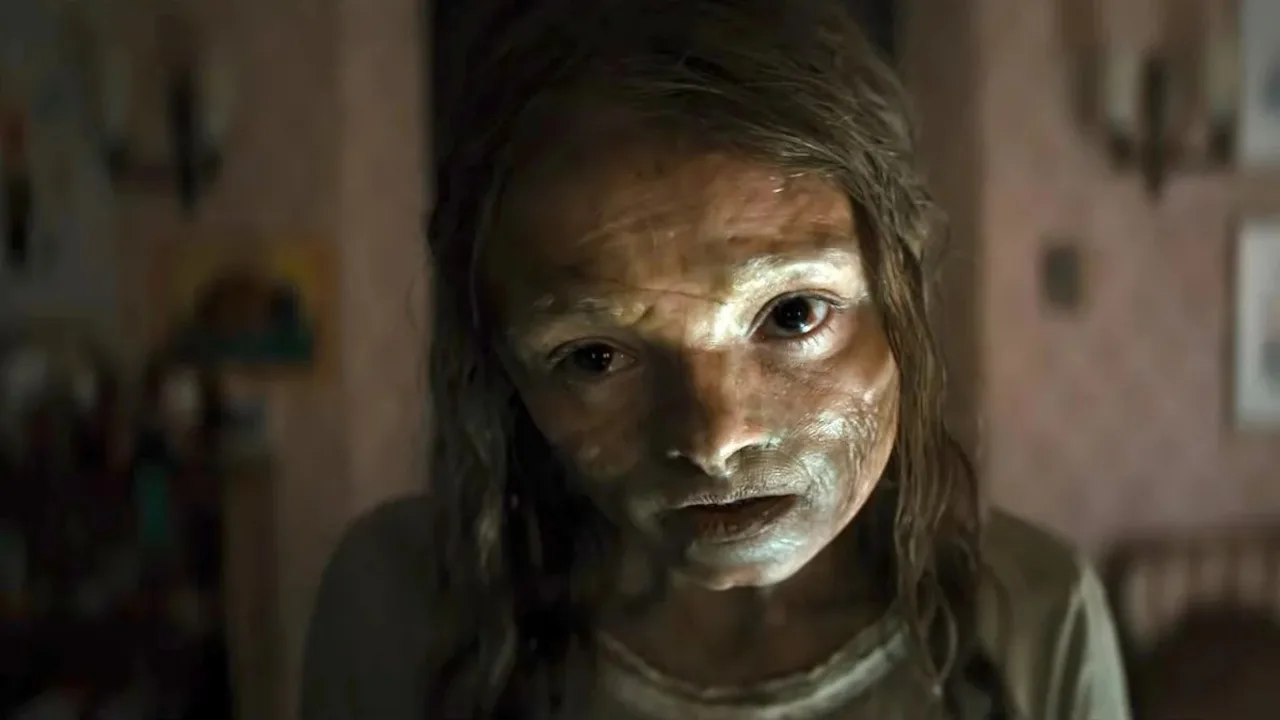
But Natalia Grace’s character, Katie, falls squarely into my favourite kind of scary: the uncanny valley. This is the kind of monster that keeps audiences suspended in horror and a wonderful discomfort merely through its presence on-screen.
And this paired perfectly with the nature of Katie’s character in this film, because she’s simultaneously a monster to be feared, and a tragic victim to be pitied. The predicament the main characters find themselves in is something I’ve never experienced in horror: one where they’re deliberately choosing to bring the monster into their home.
When the mummy is introduced, it’s like audiences are thrust into the shoes of the film’s characters. What do you do when it’s your responsibility to care for the monster, potentially at the cost of your safety? When the monster is supposed to be your loved one? When you’re not sure if they still are?
This sense of balanced and contained fear is only bolstered by the mystery behind Katie’s condition, where the movie at first leaves it ambiguous as to whether it’s caused by a supernatural force or something purely biological. Charlie (Katie’s father) discovering the events that transpired and unravelling the lore only adds to the plot.
I might be reading a little too deep into the plot, but I began to feel like the film was a horror-fied version of the experience of being caregivers to an infirm dependent, portraying the stress it can have on the interpersonal relationships within a family.The dialogue between the main characters was highly believable and, if you’ve ever been in a similar situation, might even hit too close to home at times.
It was because the film started out this strongly, and, dare I say, uniquely, that I thought I might’ve been in for something innovative, something that was as in-your-face scary as it was psychologically unnerving. I got my hopes up, excited to see if they could pull off a truly satisfying ending.
My hopes, however, would be in vain.
As quickly as it began, Katie’s mysterious, pitiable and capricious monster gives way to your run-of-the-mill malevolent possession-type ghost. This shift from victimhood to outright malice was an unfortunate and disappointing departure from the atmosphere of dread she’d previously effectuated. It also seemed inconsistent with some of her actions in past scenes.
But that’s not even the worst part. It’s that for the last hour or so, the film, (and I didn’t want to use this word at first) devolves into almost pure body horror.
Look, body horror has its place in these films. In fact, the first instance of it is executed creatively and memorably. But when it’s followed by almost an hour of just back-to-back body horror, with barely anything scary stemming from the supernatural, that’s when you know you made a mistake seeing this in cinemas.
It’s said that The Exorcist had scenes that were so appalling to audiences of 1973, that viewers walked out of its showings en masse. And, after this experience, I can say that I get it, because that’s all my wife and I wanted to do throughout the second half of the movie: leave.
But, having been tasked to review this film, I didn’t have that luxury. So, like the viewers of The Exorcist who were too afraid to exit, we got the wonderful experience of being confined to a cinema as the images on screen assaulted our eyes with scenes of gore and gross-out fear, because they were either too uninspired or too lazy to come up with anything actually scary.
The second half of Lee Cronin’s The Mummy is a great example of when a horror movie decides to force the lowest hanging fruit down the audience’s throats, because technically you’re still horrifying them if they’re cringing and recoiling from disgust, right?
As if it wasn’t un-scary enough by this point, the climax of the film turns into your typical exorcism ritual a la The Conjuring that looks like it belongs more in an action film than a horror movie. At least it was stylistically executed. Its predictability, however, was only compounded by the fact that the heroes’ final effort to defeat the monster rely on a character managing to do something that barely made sense.
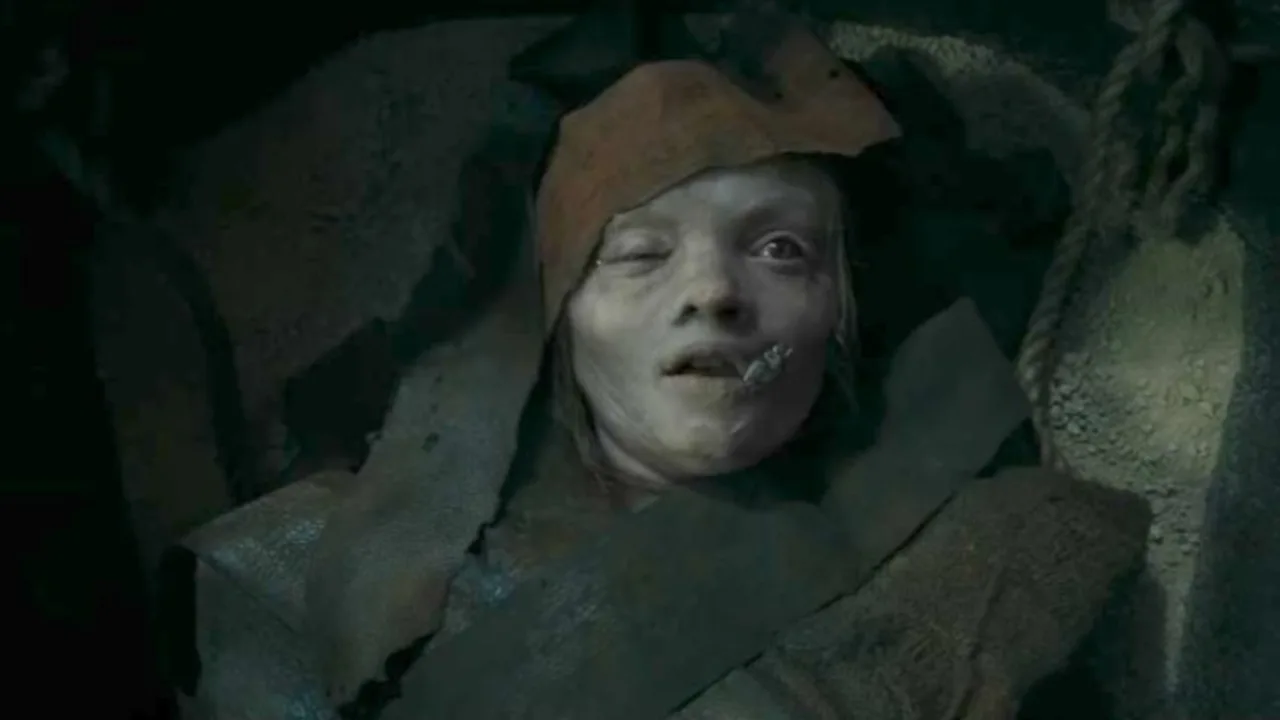
And to top it all off, the film wasn’t satisfied with just a Hollywood ending that robbed many previous scenes of their impact. Instead, it goes out of its way with a mid-credits scene to give audiences an extra, roundabout Hollywood ending that pushes your suspension of disbelief as to how it happens to the absolute limit.
To wrap up this review (pun intended) Lee Cronin’s The Mummy does have its merits, they’re just not worth sitting through the copious amounts of body horror and cliche tropes for. But if you liked Saw, then maybe this one’s for you.
Now if you’ll excuse me, I’m going to go apologise to my wife again for bringing her to see this.
Review up by Muhd Muhaimin