

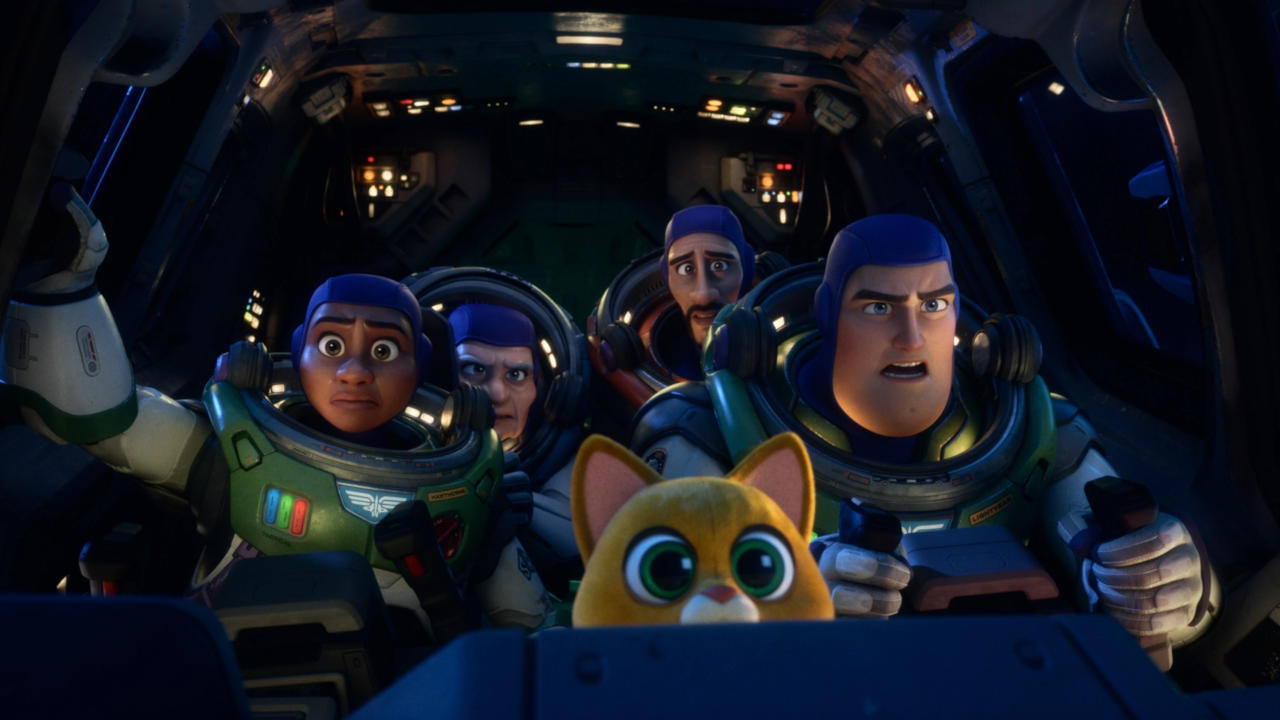
“To infinity… and beyond!”
Not since the release of Toy Story in 1995 has a child gone without uttering those words at least once. And it’s no wonder–the seminal film functioned as an extensive analogy on the significance of maintaining a childlike innocence throughout life, and has defined what it means to be a child at heart for many over the last three decades.
And even after having conquered the throne as the single best trilogy ever (on this hill I will die), the franchise moved on to a new leg of short films, and even a fourth entry which (somehow) continued to break our hearts as much as they taught us about life.
So it wasn’t with very much surprise that a new dimension of the Toy Story universe was to be explored by way of an in-universe movie which inspired one of the many iconic toys we’d all come to know and love.
Enter Lightyear.
Featuring Disney golden boy Chris Evans in a story with more parallels to Captain America than accidentally possible, Lightyear sees the titular character on a character-moulding journey, going from the space ranger the toys are seemingly based on, to the legendary hero who has inspired generations.
Evans brings his heroic best to the character while offering the same vulnerability his plastic counterpart possessed in the Toy Story series, his performance effortlessly doing the character justice while playing off his co-stars easily. While the nature of the story doesn’t really allow Evans’ Buzz to spend as much time with certain characters as he does with others, each and every one of them prove to be memorable and impactful to Lightyear’s journey.
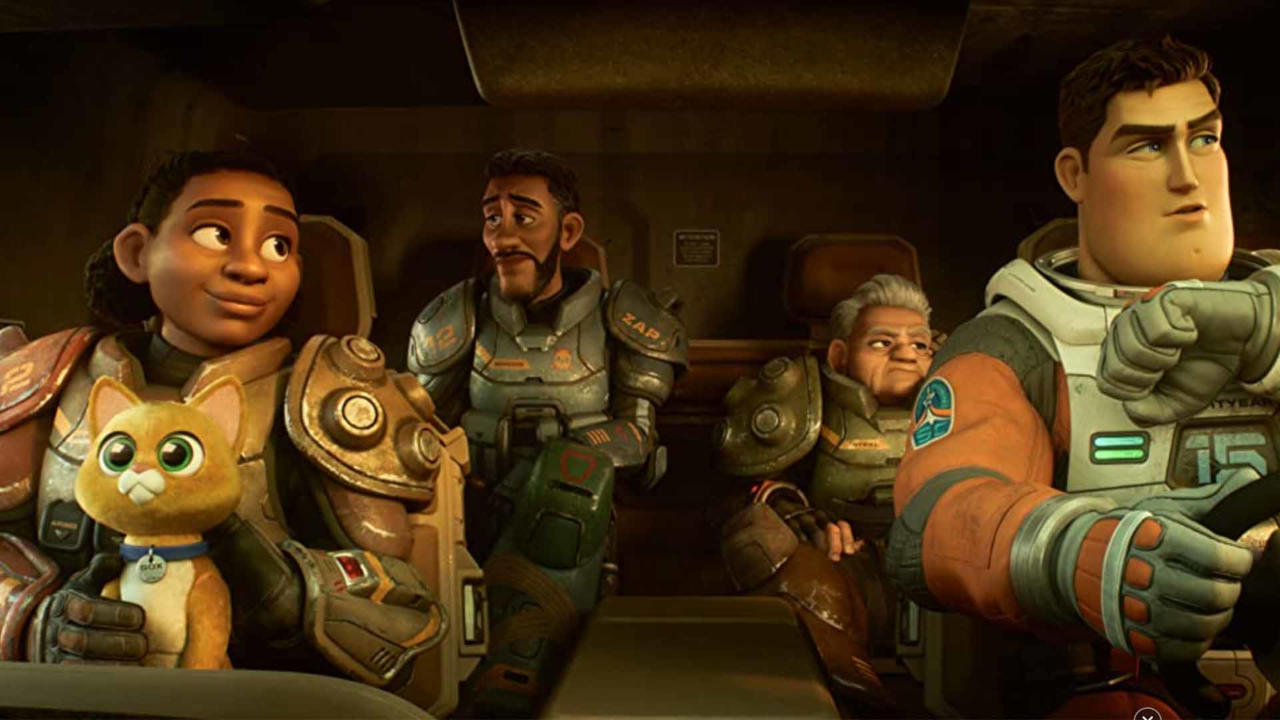
Unsurprisingly, Keke Palmer, Dale Soules and Taika Waititi all provide an emotional anchor alongside efficient delivery on humour and action, with Peter Sohn playing the sidekick we now wish had been in the Toy Story saga all along. But it is Uzo Aduba’s Alisha Hawthorne who takes the crown as Captain America Buzz’s moral compass and emotional core.

However, while the acting–both vocal and animated–is near perfect, and the core missions and adventures fun and interesting, at no point does the film feel particularly necessary. Not that movies need to be necessitated, and some of the best shot films are often superfluous exercises of needlessness, but with Lightyear this feels more like a missed opportunity. Where the film could have transcended beyond being just embellishment of the Toy Story universe, Lightyear chooses to stay safe and play within the familiar confines of the generic introductory sci-fi flick.
Not that this is necessarily a bad thing, especially since it seems to have been the intention of the film in the first place, but it does feel like a wasted opportunity.
Fundamentally, Lightyear’s strength lies not in its ties to the larger Toy Story franchise, but in the same simplistic and emotionally resonant storytelling which all Pixar movies employ. And as far as Pixar movies go, that formulaic sincerity has yet to fail them, with Lightyear keeping up their streak of success even if not quite as stellar.
Lightyear is out now in all theatres, and will soon be on Disney+, where it can be enjoyed by audiences of all ages as it should be.