

It’s a hardsell, these days, to have people go watch a movie that doesn’t involve Earth-bound deities fighting off alien threats, or families working out their issues with laser swords and telekinetic mystical fields.
But, every now and again, we’re treated to a true blue cinematic experience which makes the trip to the big screens an organic joy without their only merit being their backing mega-franchise.
Top Gun: Maverick was one of those experiences, and while the near-perfect Everything Everywhere All At Once deserves to be atop any such list, its heavy subject matter and exhausting emotional journey makes it a little harder to qualify as an easily enjoyable film.
And, now, there’s Bullet Train.
Based on MariaBeetle, a Japanese novel by Kōtarō Isaka also entitled Bullet Train in English, the film takes some obvious and expected liberties to offer a slightly less complex but possibly busier action-comedy piece.
The typical Hollywooding of source material aside, Bullet Train successfully pulls off a fun and intense adventure which manages to keep characters interesting, and for audiences to root for a fair number of them.
Well-paced, consistently action-packed, and consisting of great comedic and emotional performances, Bullet Train’s only flaw may be a rather simplistic plot that sometimes leaves the twists feeling a little too convenient.
But in a film with as many moving elements (pun so intended), the simplification of the novel’s storyline may not have been a bad thing. It does, however, leave you wanting to learn more about the original tale.
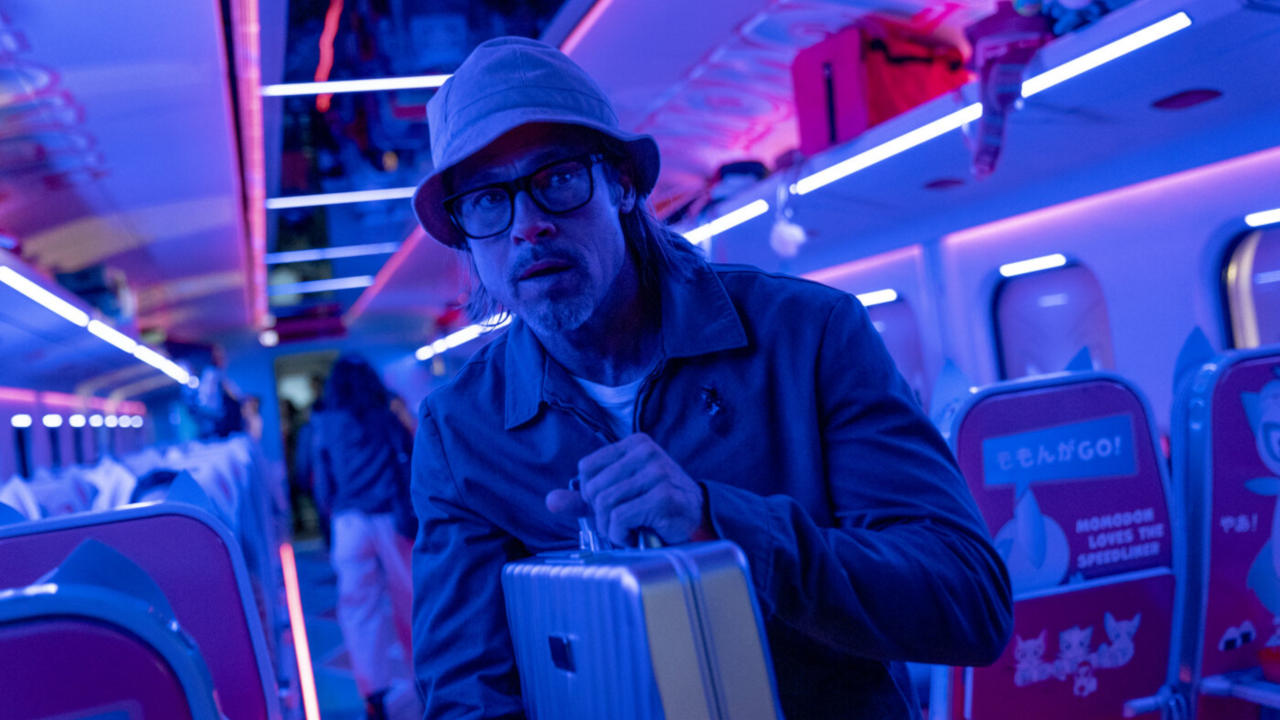
Interestingly, while Brad Pitt, as Ladybug, effectively leads and strings together much of the movie, the remaining cast also do a splendid job in holding their own, even outright scene-stealing at times.

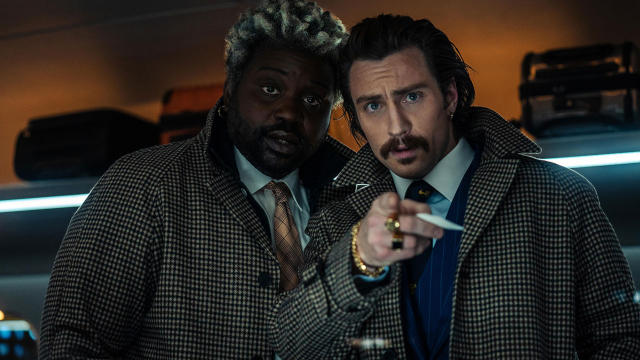
Both Aaron Taylor-Johnson and Brian Tyree Henry are more than just likeable throughout the film, arguably getting more development than Pitt’s Ladybug. Joey King’s Prince somewhat shortchanges both her as well as the original character, but does take the centrestage somewhat.
A strength in the casting for Bullet Train, however, is that some of the actors in it are a pleasant surprise to see… even though the trailer kinda ruins at least one of it. Additionally, what little cameos there are are used sparingly and for pretty good comedic effect.
It is still a bit of a sore spot that the characters had to be whitewashed, and had the movie not insisted on still utilising Japan as a flavourful backdrop, perhaps it may have been more palatable.
That said, whatever emotional core there is in this film is owned entirely by Hiroyuki Sanada and Andrew Koji.
Bullet Train is an example of how there is still room for fun and entertaining movies which can adapt multimedia material without having to conform to a franchise structure. And while this, in turn, highlights a new pain point wherein Hollywood could do better, at the very least it’s an actually good film which isn’t just harping on brand power.