

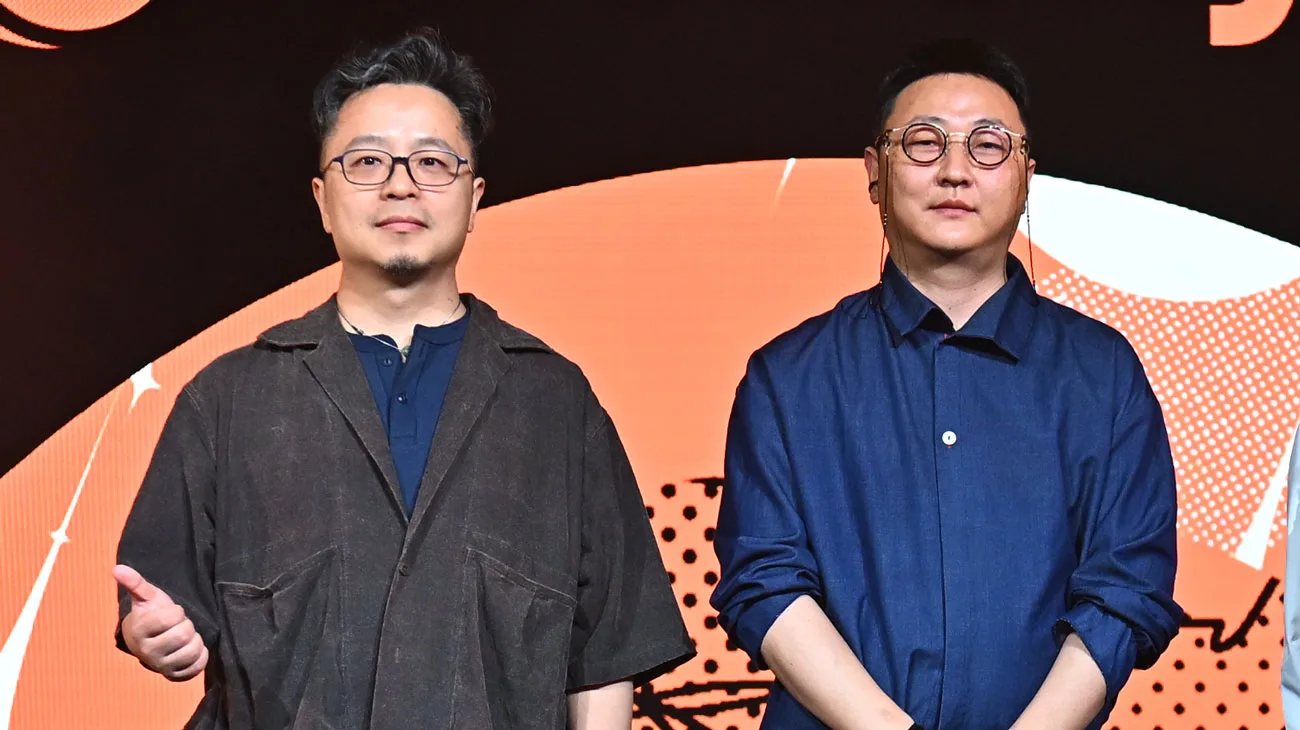
Lord of Mysteries is not the kind of show you put on in the background. The dark fantasy series, adapted from Cuttlefish That Loves Diving’s hit Chinese web novel, throws viewers into a Victorian-inspired world of tarot, Beyonders, and unknowable gods. It’s dense, deliberate, and proudly slow-burning… and that’s exactly how director Ke Xiong and scriptwriter Liu Xing want it.
Speaking to justsaying.ASIA at Anime Festival Asia (AFA) Singapore 2025, the duo shared how they approached adapting a 4.5-million-word epic into a donghua (animation produced in China) that still feels faithful to the source, yet watchable for first-time viewers discovering Klein Moretti’s story through animation.
Unlike many donghua that start from manhua (Chinese-language comics), Lord of Mysteries comes straight from a novel. “Compared to our past adaptations, Lord of Mysteries has massive world-building,” Ke said, noting that the series demanded a different level of structural planning.
The team had to rethink how information, lore, and character moments would unfold visually, leaning heavily into its late-Victorian, steampunk-tinged roots, while avoiding turning it into a strict period piece.
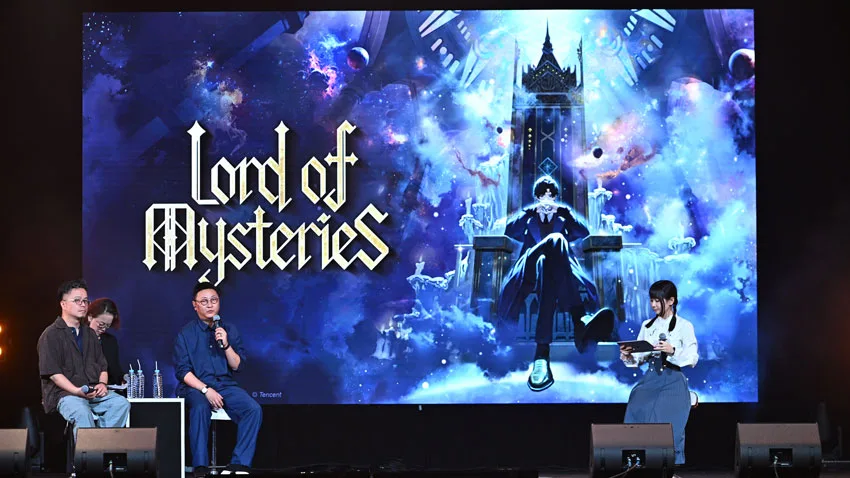
Ke shared that the production began with a vast collection phase: reference images, sample designs, and iconography. The aim was not to recreate Victorian England one-to-one, but to build a world that feels distinct and instantly recognisable as Lord of Mysteries.
“Because the original novel is set in the Victorian era, we wanted to be as much like it as possible,” he said. “But we are not going to do it one-to-one, to be exactly so, so that we make use of a lot of elements like colours, like construction of the buildings, like what the characters look like, what they dress.”
Architecture, costumes, and colour palettes were all used as storytelling tools. Horror elements are often expressed through sharp colour contrasts and visual framing, while props from potions to tarot serve as anchors to help viewers orient themselves in a complex setting.
Liu described the original as the most complex novel to adapt precisely because of that scale. Across millions of words, author Cuttlefish seeds concepts and clues that may only become relevant a hundred chapters later. Ignoring them would break the story, but explaining them too early risks losing the audience.
That tension sits at the heart of the adaptation. New viewers often say the same thing about Episode 1: “I was confused.” Ke and Liu are well aware. “Up until Episodes 4 and 5, the audience will be quite confused,” Ke admitted with a small smile.
“Even from our own perspective, we hoped that the story was much simpler because that means it would’ve been easier for us.”
But that’s not what Lord of Mysteries is. Rather than stripping out the complexity, the team doubled down on a character-first approach. If they tried to explain the entire world from the start, they felt most people would tune out. Instead, they chose to let audiences walk beside Klein.
“Our standard was always Klein,” Liu explained. “We start from his character. But we have a few standards that he has to keep. That is, the key points of every first story. From there, we decide what must stay and what can be simplified.”
The result is a first season that is unapologetically focused through Klein’s eyes. Scenes are kept if they reveal something crucial about his journey, from his early days in Tingen City to the losses that shape him later on. Everything else is carefully weighed against pacing and clarity.
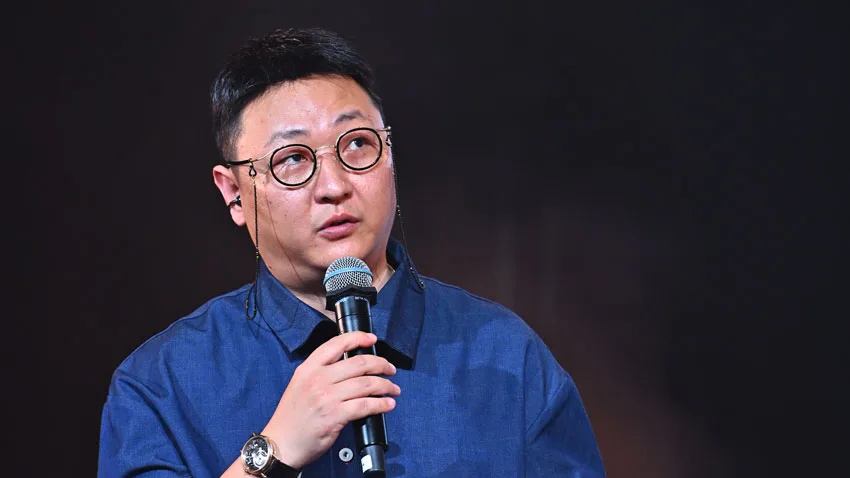
“We want viewers to understand and like the character first, and have empathy for him,” Ke said. To do that, the anime spends time on Klein’s daily life – his work, his relationships with colleagues, his family, his ordinary routines in Tingen – and gradually layers in the supernatural and political threats. Many of those threats, Liu pointed out, aren’t even aimed at Klein directly.
“All the pressure he faces isn’t really for him as an individual,” Liu said. “It’s very realistic. A lot of us live like that in the real world. All the pressure we’re facing isn’t really for your individuality.”
As Klein loses teammates, says goodbye to family, and slowly becomes more proactive, the audience is meant to feel the shift with him. Only after that emotional foundation is laid do the bigger pieces of the world-building start to click.

Despite never planning specifically for an international audience, both Ke and Liu have been surprised by Lord of Mysteries’ global reception. “From the beginning, we did not think too much of whether we should target a domestic audience or the internet, because this story is a new storyline,” Ke said.
“We were actually able to get a lot of positive feedback from foreign audiences, which was quite surprising for us.”

At the core, though, nothing has changed. “We want audiences everywhere to connect through emotions,” Ke said. “We want to connect the global audience from the emotional perspective, from the human side of things. We want them to like and understand the characters, which will form the basis for our subsequent development of the series.”
One of the biggest headlines around the project is its 10-year plan: seven seasons and a final film to cover the entire story. “The whole team is very happy,” Liu said. “In fact, the long-term planning represents the recognition of the production team for the work.”
Ke, meanwhile, was more blunt. “Ten years is a long time. It sounds scary,” he joked. “When they told me, I thought: by the time we finish, I’ll be old.”
But both are determined to use the long runway wisely. For Season 2 and beyond, they plan to highlight more of the characters’ daily lives, ordinary moments that bring humanity into an overwhelmingly mystical world. They’re also refining pacing and emotional beats based on feedback from English, Spanish, and other languages received online.
For now, if you bounced off Episode 1 the first time, Ke has a simple request: come back, sit with the confusion, and follow Klein a little longer.
Lord of Mysteries is now streaming on Crunchyroll.