

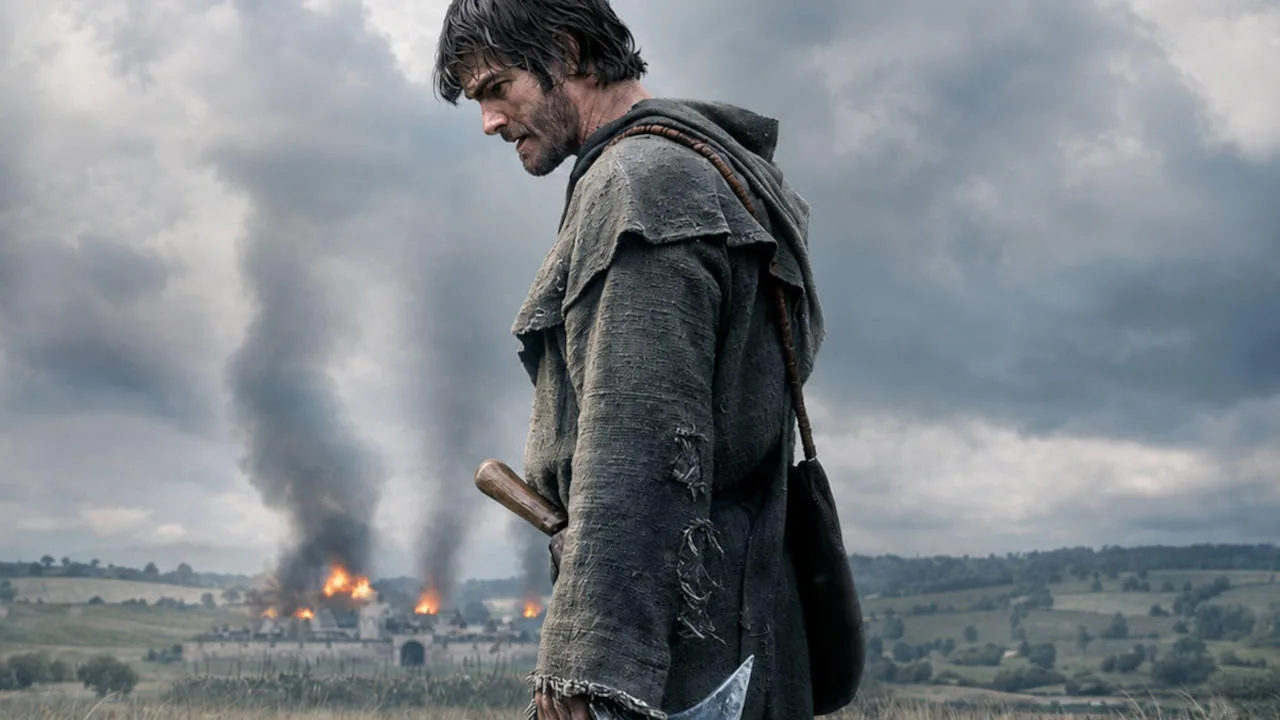
In a way, watching The Uprising was like watching a culinary film. It’s essentially the story of a political pressure cooker that inevitably explodes, resulting in a generous serving of satisfying mob violence, torched by the flames of indignation and oppression.
In the words of Mario Savio, “There is a time when the operation of the machine becomes so odious, makes you so sick at heart, that you can’t take part; you can’t even passively take part … ”.
You know what’s a great way to make the machine really odious? Forcing exorbitant taxes on an indentured population decimated by a recent pandemic to fund foreign wars of aggression which serve only the land-owning class and the interests of a small, powerful, and wealthy in-group. Could you imagine living in such a horrible reality? It sure is a good thing modern governments would never repeat such injustice from more than 6 centuries ago.
But regardless, seeing The Uprising is gonna get your blood pumping. It might make you feel like marching hundreds of miles in solidarity with your fellow people to protest petition the ruling class to treat the common man (and woman) with dignity and respect.
There’s something about watching underdogs fighting for their freedom that strikes an empathetic chord in viewers, appealing to innately human desires. The film exalts egalitarianism and collectivism, and admonishes the artificiality of the hierarchy erected by the ruling class. It naturally galvanises audiences to want to seek redress for the social evils created by plutocracy and a dangerous concentration of power.
It reminds us that absolute power corrupts absolutely; those in power will use any means necessary to keep it, even if it means resorting to cowardice and underhandedness.
At the same time, The Uprising doesn’t purely glorify collectivism, choosing to portray the disorder and injustice typical of mob violence, perpetrated by the oppressed on whoever they deem as others. Points to the film for historical accuracy.
What I can’t give as many points as I’d like to, however, are the character arcs in the film. One weakness for this film is that our protagonist, the Ploughman, played by Andrew Garfield, felt at times more like a vessel for the rage of the mob rather than the emotional core of the movie. But it would be unfair not to mention that Garfield does a phenomenal job with the role he’s given, absolutely nailing his serious and humourless role while still making his character endearing and sympathetic.
Woody Norman similarly knocks it out of the park as the film’s main villain, King Richard II. Norman gets the opportunity to portray a wide range of emotion and to command vastly different levels of gravitas throughout the film. It’s hard to think of a better role to show off your acting chops, and, boy, does he deliver every time.
It’s also worth mentioning that I might not have noticed some of the film’s character development due to the lack of subtitles and the actors’ heavy accents at times made the dialogue impossible for the average non-Brit to decipher. This was a shame as there were some beautiful bits of poetic language when I could understand them. At least they weren’t speaking Old English. Points for avoiding that bit of historical accuracy, though I’d still recommend trying to catch a showing with subtitles.
What the film lacks in characterisation, it more than makes up for with its action, and you’ll get plenty of that (at times with a side of gratuitous violence). The Uprising strategically utilises action in a way that makes the film not feel draggy despite its 2-hour runtime, with each instant of violence being purposeful in furthering the plot, not being there simply to keep audiences awake. Not to mention that they’re very well-choreographed even in scenes where they’re a little over the top.
However, in an imagining of a conflict from 645 years ago, I would’ve hoped that the directors and choreographers would have taken more creative liberties in their action sequences. The rule of cool could’ve been applied more liberally here, instead of opting to make the main characters unreasonably good at fighting.
Regardless of its shortcomings, The Uprising is an important film for the everyperson to catch. In a world where the powers-that-be seek to divide and conquer, it’s always useful to remind oneself that class struggle is the war that’s most worth fighting.
Plus, it’s a really gripping movie thanks to its airtight narrative. Expect to get sucked into the 14th century with this one.
– Review up by Muhaimin