

Annual football games have a difficult job. Change too little, and they are accused of charging for a squad update. Change too much, and somebody will explain, at considerable length, why football peaked three editions ago.
EAFC 27 attempts to move things forward on both sides of the touchline, with more demanding defending, expanded tactics and a new social space called The Grounds.
There is certainly plenty here. More significantly, EAFC 27 increasingly feels like a game for three distinct audiences: the Ultimate Team faithful, the management enthusiasts, and the players who want to build a career around their own virtual footballer. Each has a different reason to turn up, and each expects enough depth to keep coming back.
With most of our time spent in Ultimate Team, the changes on the pitch matter more than the size of the feature list. Building a squad is only satisfying if the players feel different, your decisions carry weight, and the game gives you enough control to turn a plan into a result. EAFC 27 makes worthwhile progress in that direction, even if familiar frustrations remain.
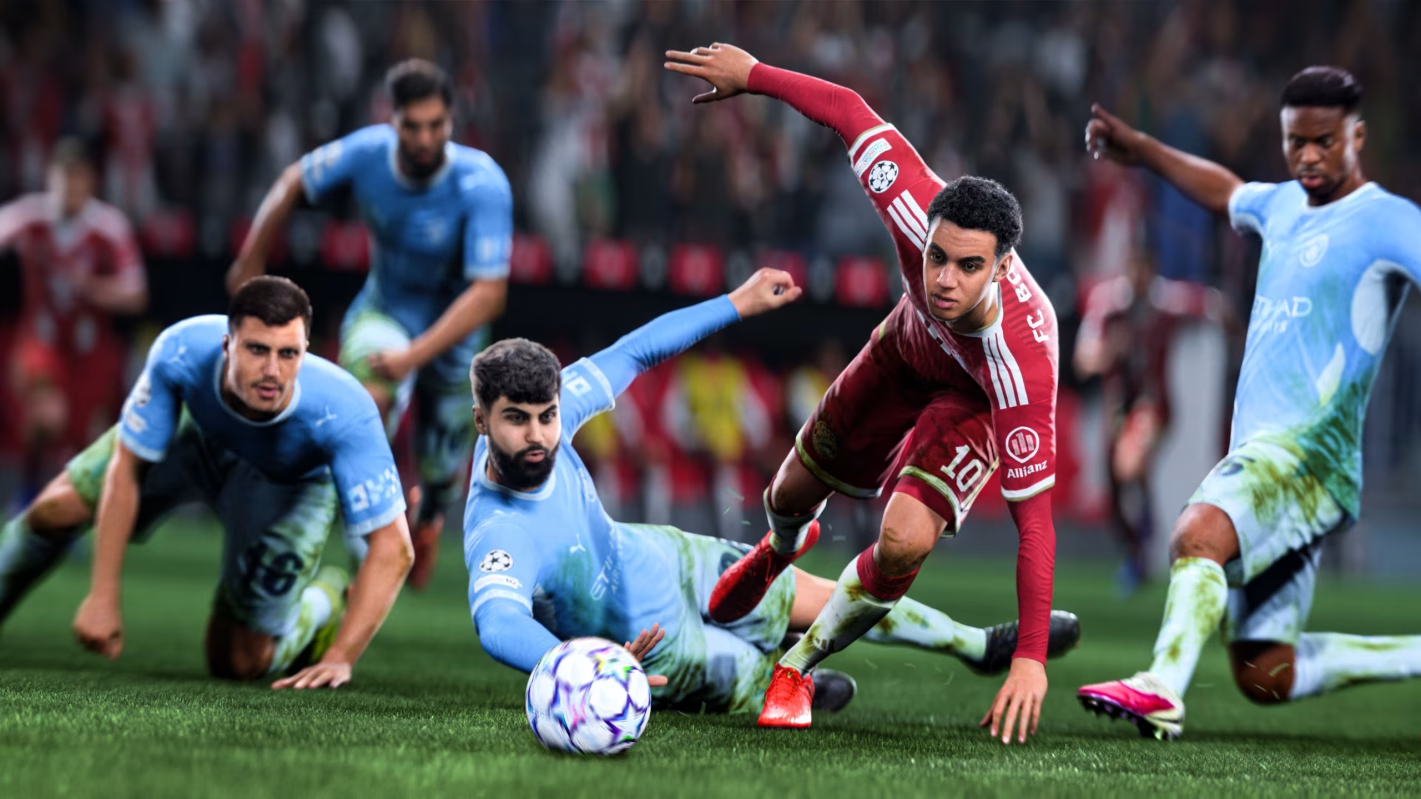
Defending demands more involvement. Selecting the right player, maintaining your position and knowing when to challenge take greater importance, making it harder to leave the dirty work entirely to your computer-controlled teammates. There is a heavier feel to defensive movement, which asks you to commit more carefully instead of constantly throwing players towards the ball.
That can make the adjustment uncomfortable, particularly if your usual defensive strategy involves sprinting at the attacker and hoping somebody else tidies up. However, the greater emphasis on manual control is a welcome direction. A well-timed interception or a patient spell of jockeying should feel earned, and a defender pulled out of position should leave a gap worth exploiting.
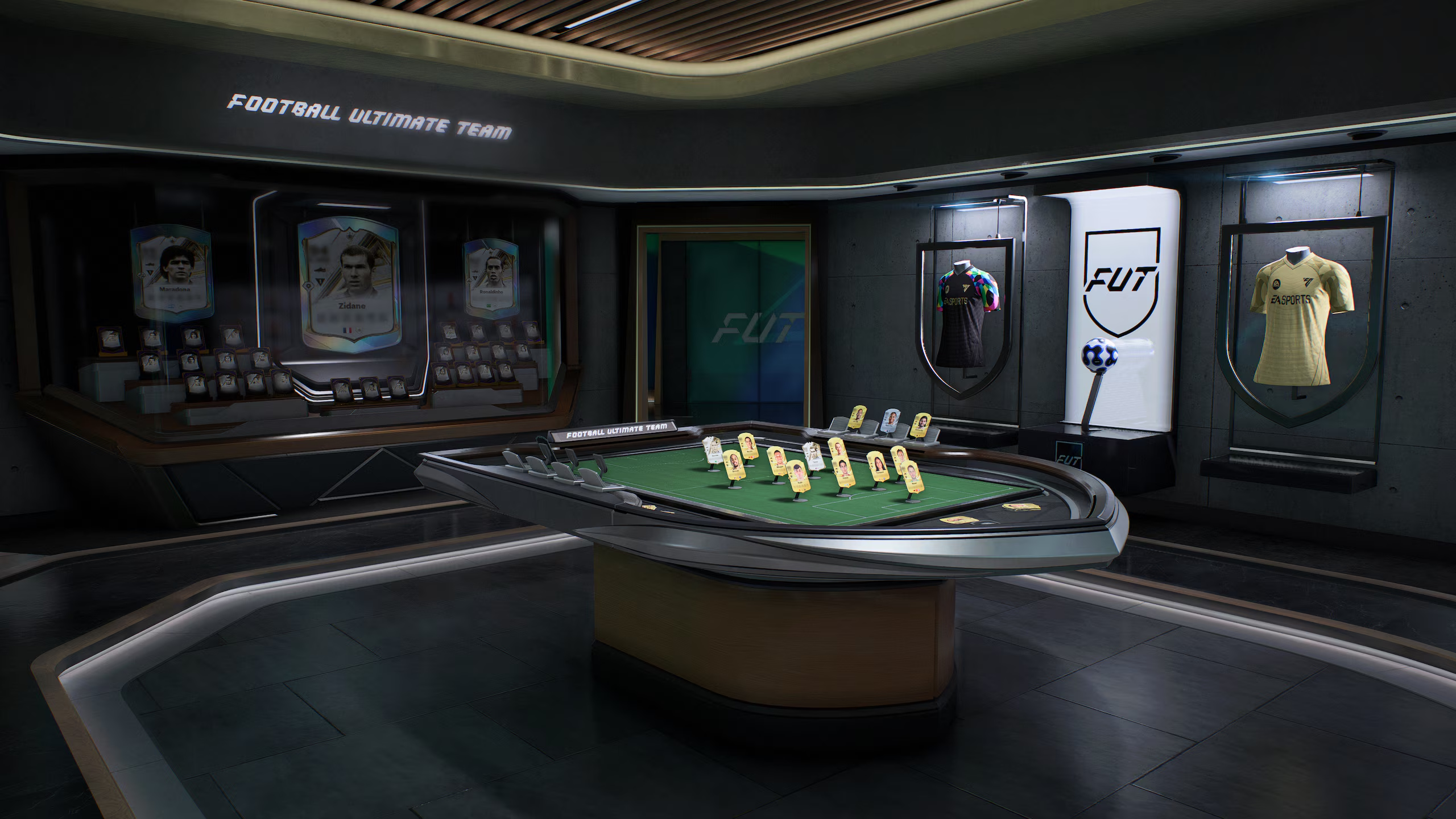
The distinction matters in Ultimate Team, where assembling impressive cards can sometimes threaten to overshadow knowing how to use them. More responsibility in the player’s hands gives the football a stronger foundation. Your centre-back’s attributes still matter, but so does what you ask him to do.
Differences in pace and running styles also give squad selection more meaning.
The Grounds is EAFC 27’s biggest addition, and it deserves more attention than a passing mention between Ultimate Team and Career Mode. It changes how the game presents its created-player experience, giving your footballer a shared world to inhabit rather than simply a sequence of menus and matches.
If you have spent time in the community hubs of 2K’s NBA and WWE games, the approach will feel familiar. You create a player, enter a social space, develop their abilities and move between activities alongside other players. EA is borrowing an established idea, but football gives it plenty of opportunity to develop its own personality.
The Grounds is divided into three districts: Montclair, inspired by Paris; Zeiza, drawing from Buenos Aires; and Parkside, taking its cues from suburban Britain. These settings reflect different expressions of football culture, from street football to neighbourhood pitches.
Murals, architecture and football-related points of interest give each district an identity, while interactable displays offer context about players and places associated with the sport.
It is an idealised version of that culture, admittedly. Parkside is considerably more interested in celebrating community football than recreating a rain-soaked evening spent retrieving a ball from somebody’s garden. Still, the setting gives EA room to show football as something people grow up around, rather than something that exists only inside a stadium.
At the centre sits the Terrace, a shared arrival space that connects the experience. A customisable clubhouse gives squads somewhere to gather, while the surrounding districts provide access to different activities. The appeal is having a place to meet friends and decide what to play together, with your created footballer providing continuity between sessions.
There is a substantial selection of football on offer. Traditional 11v11 Clubs and 5v5 Rush sit alongside smaller 1v1, 2v2 and 3v3 experiences. Those formats serve different moods and group sizes. A full team match demands coordination, while a smaller game offers a quicker way to get involved when only a couple of friends are online.
The Kickabouts take that flexibility further, pushing football into party-game territory. Goal Control has players competing to claim goals positioned around the pitch. The Big Race turns dribbling into an obstacle course. Bucket Ball mixes football with basketball-style scoring, while Balloon Ball borrows from dodgeball, asking players to pop opponents’ balloons by hitting them with the ball.
These activities give The Grounds a purpose beyond housing familiar modes in different buildings. They offer somewhere to mess around with friends when nobody particularly wants another serious fixture. Whether they have enough depth to remain entertaining over repeated sessions is another question, but they broaden what an evening in EAFC 27 can look like.
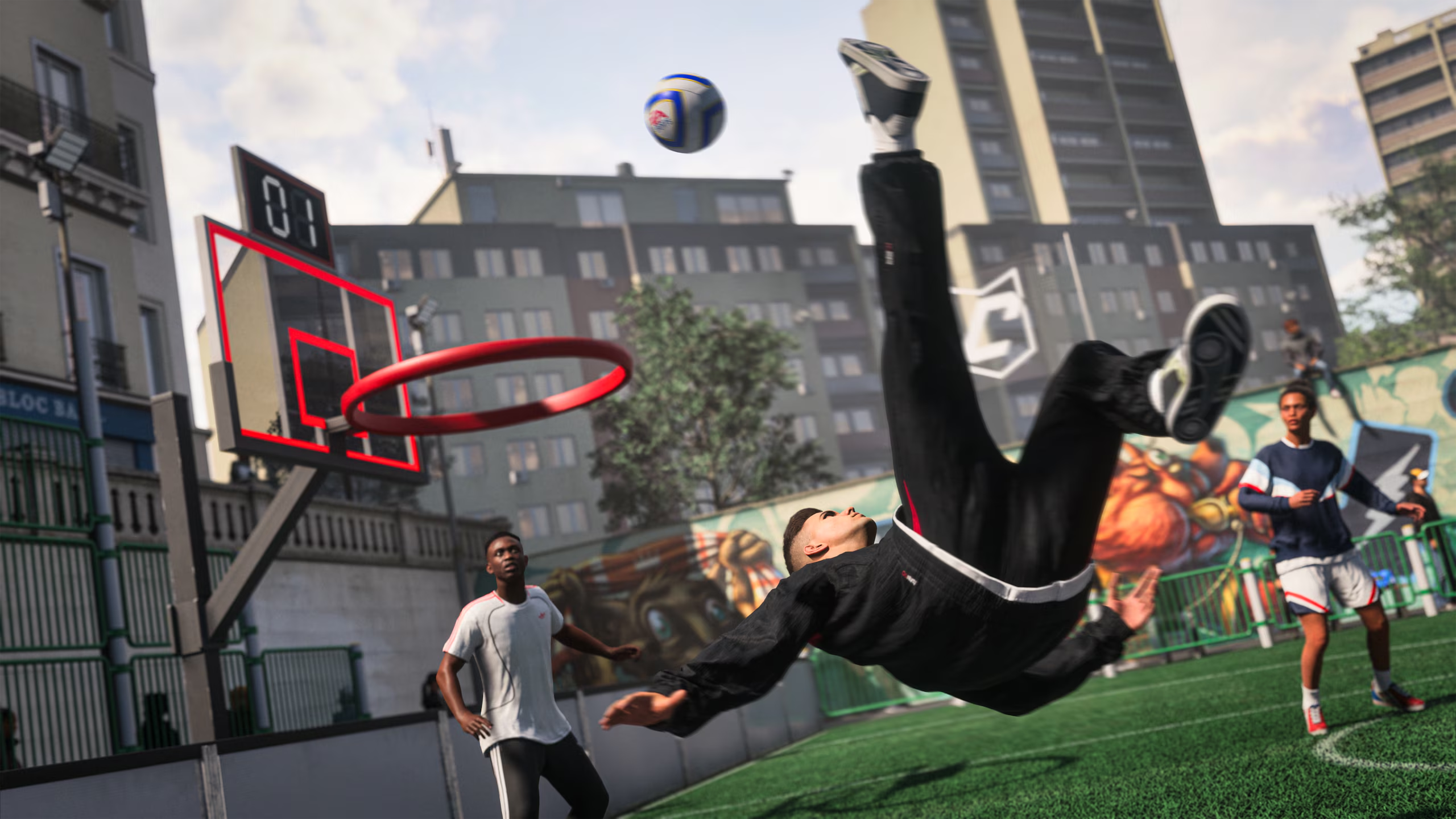
Exploration also includes Drop Kick Targets scattered around the environment, encouraging you to interact with the world using the ball. It is a playful touch that fits the street-football theme. Its lasting appeal will depend on whether discovering these targets remains enjoyable or eventually becomes another checklist to clear.
The mentor system gives the experience some direction. Alex Hunter returns from FIFA’s The Journey, joined by Kylian Mbappé, Paulo Dybala and Chloe Kelly. These characters introduce activities and challenges, connecting progression to recognisable football personalities. Hunter’s inclusion is a particularly welcome nod to a period when the series experimented more directly with storytelling.
These encounters should not be mistaken for a full replacement for The Journey, though. Their role is to guide players through the hub and its systems. The reported stiffness of some performances and introductory scenes also suggests that recognisable faces alone cannot make those interactions compelling. A football playground benefits from personality, and the presentation needs to support that ambition.
Developing your player is the more substantial reason to keep returning. Archetypes provide a foundation for your footballing identity, while challenges and progression build permanent attributes. The ability to respec without a fee is welcome, allowing you to experiment rather than remain tied to an early decision about how you want to play.

That matters because your role may change depending on who you play with. The footballer you build for one group or format might not suit another. Giving players room to adjust encourages experimentation and makes the shared experience more accommodating.
Amps add a separate layer of temporary enhancement. You can equip up to three, gaining attribute boosts and access to additional perks or playstyles for a limited number of matches. Signature versions draw inspiration from real players, letting you temporarily borrow elements of their footballing strengths.
This is also where the familiar monetisation concerns return. Amps can be earned through activities and progression, but they are also available through the store. Selling clothing is one thing; offering temporary improvements to what a player can do on the pitch raises a different concern. Competitive balance matters even in a mode presented as a social playground.
Cosmetics are another major part of the experience, with replica shirts, streetwear and branded clothing giving players ways to personalise their footballer. That makes sense in a shared space where appearance becomes part of your identity. However, the hub needs to remain enjoyable for players who are more interested in playing football than assembling an outfit for it.

Seasonal updates are intended to keep The Grounds changing throughout the year, with themed decorations, objectives and rewards. Football-led events such as European Nights sit alongside seasonal celebrations. This gives EA a structure for refreshing the experience, although its lasting value will depend on the activities and challenges evolving alongside the scenery.
For all that scope, the central question remains whether exploring The Grounds improves the experience of finding and playing football. The resemblance to 2K’s hubs brings both their appeal and their potential inconvenience. Meeting friends in a shared world can be enjoyable. Travelling through that world every time you want a match can become tiresome.
Reports of frame-rate drops and unnatural animations make that distinction more significant. A social hub needs to feel comfortable to inhabit, especially when exploration is part of its selling point. If movement and presentation lack polish, the distances between activities become easier to notice.
Menus remain clunky, with a crowded layout that hinders navigation. There is too much competition for attention, making routine tasks feel more cumbersome than they should. When you spend considerable time managing an Ultimate Team squad, at The Grounds or the other modes, completing challenges and checking objectives, that friction becomes difficult to ignore.
The interface needs a clearer hierarchy and more direct routes to frequently used features. EAFC 27 already asks for a substantial investment of time across its modes. Getting to the activity you want should be the easy part, rather than another small test of patience before kick-off.
The Grounds is nevertheless a substantial addition, with enough variety to warrant proper exploration. Its strongest idea is bringing different forms of football together around one persistent player identity. You can develop your pro, meet your squad, play a competitive match and then try something less serious without abandoning that shared context.
Its challenge is earning the time it asks for. Players already investing hours in Ultimate Team or Career Mode may visit briefly, while the created-player audience needs enough depth to make this their regular home. The Grounds gives that third group a much larger space within EAFC 27. Now EA needs to make sure the football, progression and community experience justify staying there.