

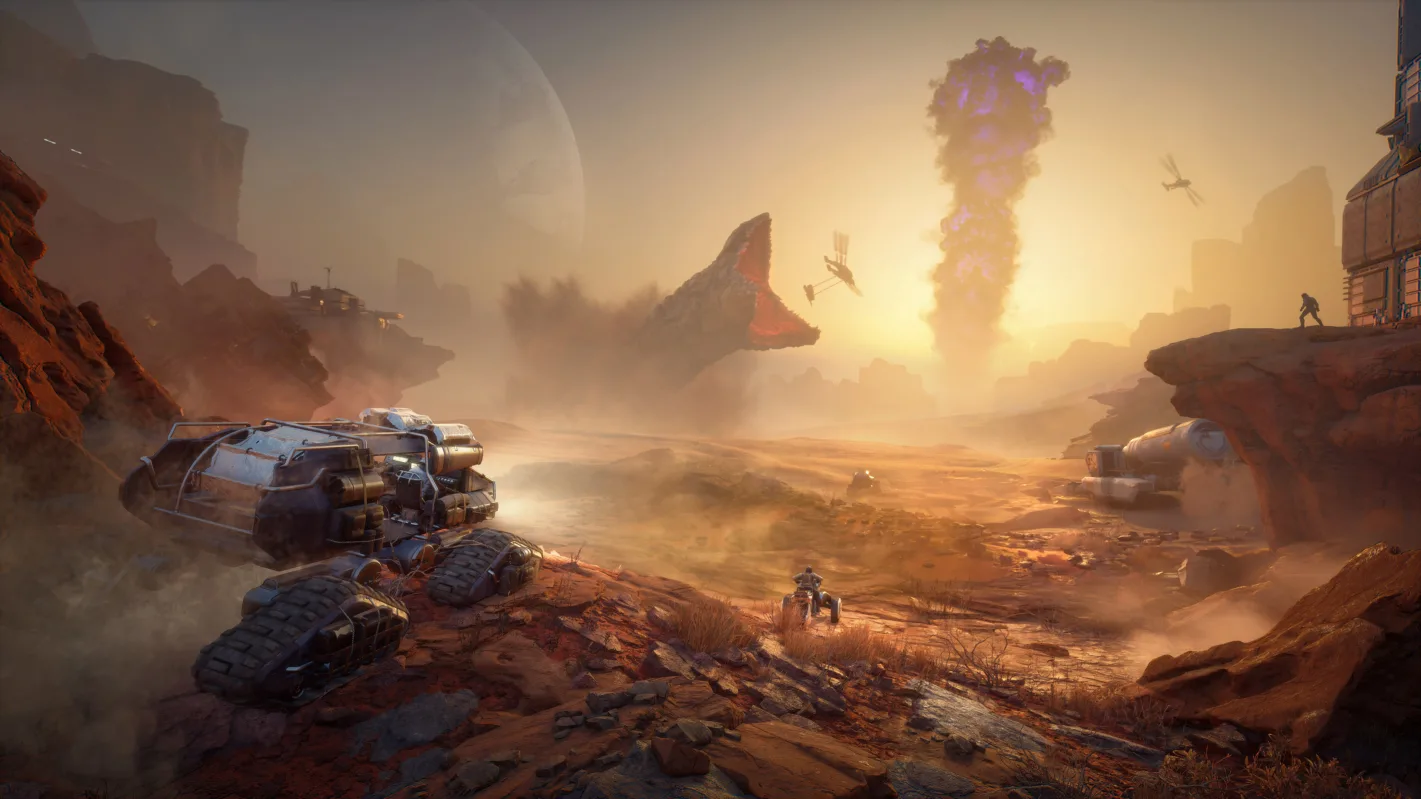
There is no shortage of danger on Arrakis. The sun is trying to cook you, dehydration is never far away, hostile factions are roaming the wastes, and an enormous sandworm is always ready to turn an ill-timed desert crossing into lunch.
Yet the most dangerous thing about Dune: Awakening might be how easily it makes several hours disappear.
Funcom’s open-world survival game has arrived on the PlayStation 5 with a substantial collection of improvements, including a full single-player mode, expanded story content and extensive options for customising the experience.
Played on the PlayStation 5 Pro, this feels like more than a belated console port. It is a polished and impressively complete way to explore one of science fiction’s most unforgiving worlds.
More importantly, it finally lets Arrakis take centre stage.
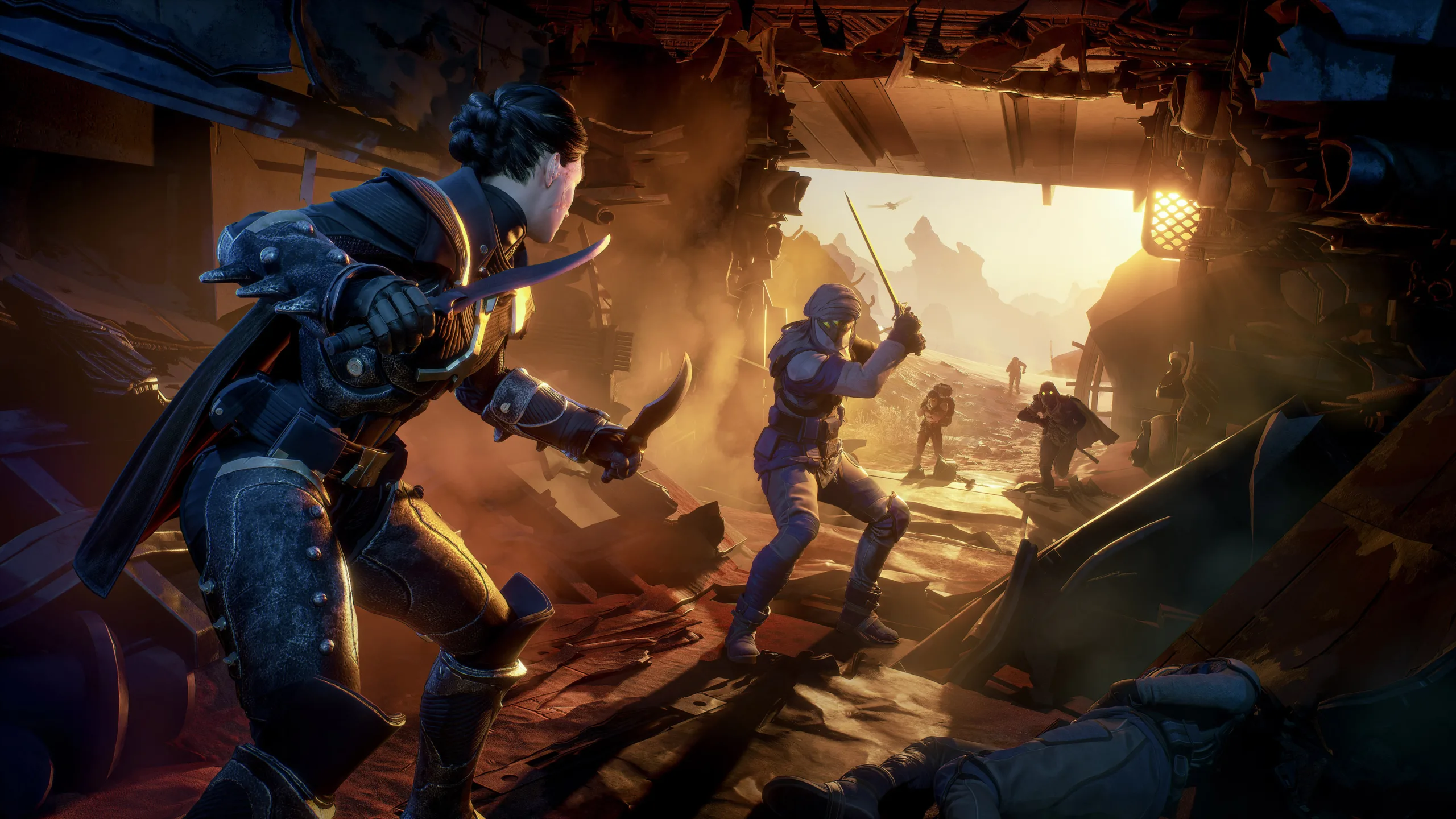
The world of Dune: Awakening is spectacular. Vast dunes stretch towards the horizon, enormous rock formations provide temporary shelter, and the harsh lighting constantly reminds you that this is a planet fundamentally opposed to your continued existence.
On the PlayStation 5 Pro, Arrakis looks gorgeous. The scale of the desert comes through beautifully, particularly when you reach higher ground and see the landscape opening up around you. Sand, rock, machinery and settlements feel convincingly connected to the same hostile environment.
The impressive graphics are not simply there to provide pretty screenshots. Arrakis shapes almost everything you do.
Water must be managed carefully. The blazing sun makes shade valuable. Crossing open sand can be deadly, and the threat of attracting a sandworm means travelling between areas is rarely as simple as pointing yourself towards a marker and holding forward.
Sandworms remain one of the game’s most effective threats because they are not treated as occasional boss encounters. They are part of the environment itself. Their presence changes how you move, where you stop and how much risk you are prepared to take.
That constant environmental pressure gives exploration a sense of danger that many open-world games struggle to create.
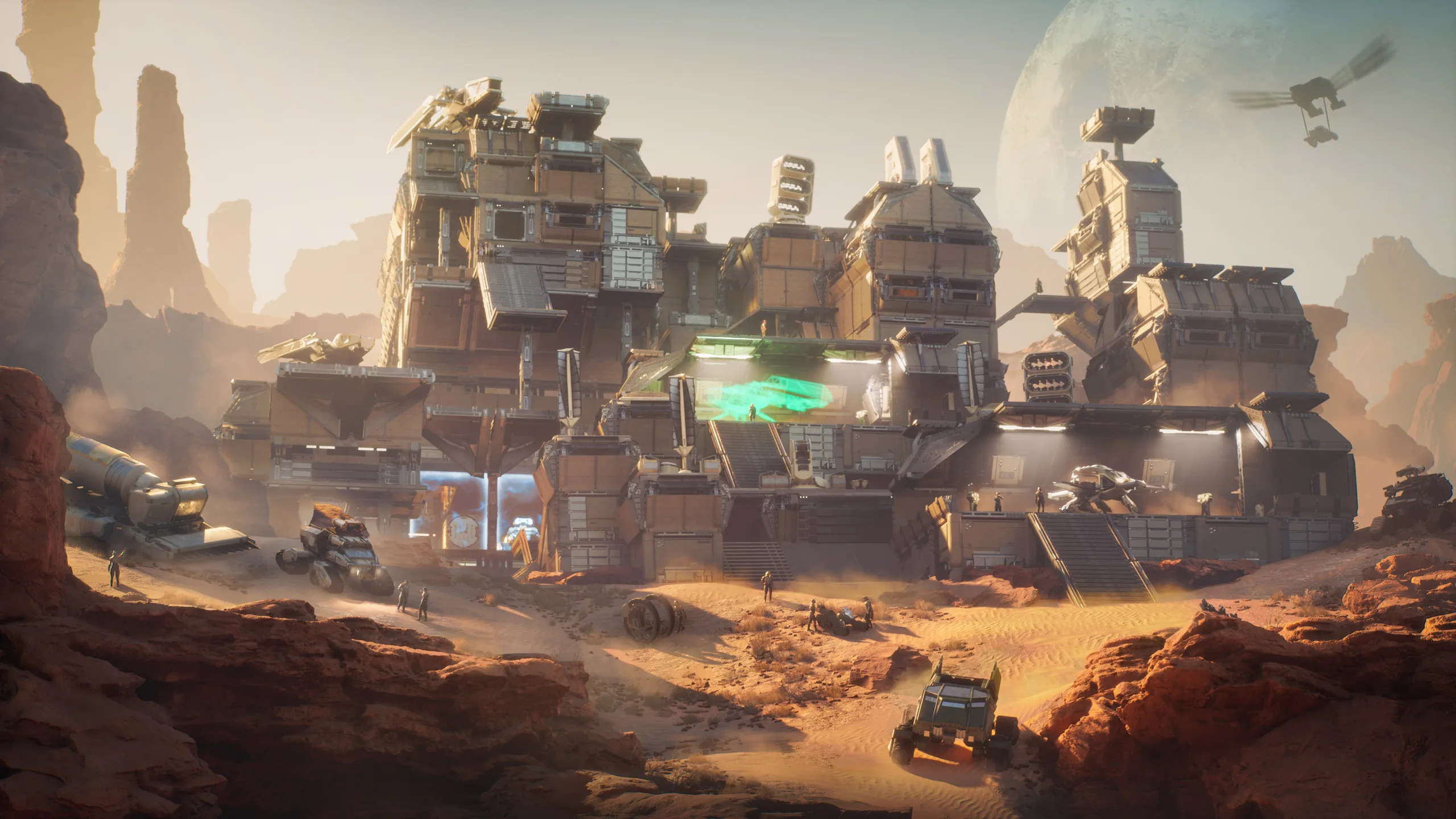
The addition of a full single-player mode is one of the most important improvements to Dune: Awakening. The game was originally built around a shared world, but playing alone gives its exploration, survival systems and storyline a much stronger focus.
Arrakis also makes perfect sense as a solitary experience. Its enormous empty spaces feel intentionally isolating rather than abandoned, while the absence of other players allows the atmosphere to settle in without someone racing past your carefully constructed base in an overpowered vehicle.
This does not mean the game has suddenly become small. There is a huge amount of content spread across exploration, crafting, faction progression, base building and story missions. The political struggle between House Atreides and House Harkonnen also ensures that the wider conflict remains present, even when you are wandering through the desert alone.
The storyline is particularly strong, providing a compelling reason to keep pushing beyond the immediate demands of survival. Rather than merely handing players a desert-shaped sandbox and expecting them to entertain themselves, Dune: Awakening offers a narrative with direction, momentum and a satisfying amount of content.
It helps the game feel like a genuine adventure in the Dune universe rather than another familiar survival game wearing a licensed stillsuit.

Survival games can sometimes become less about overcoming danger and more about tolerating inconvenience. Dune: Awakening avoids some of that frustration by offering an extensive selection of world and difficulty settings.
Players can adjust elements such as resource harvesting, experience gain and death penalties, allowing Arrakis to be as punishing or accommodating as they want it to be. Those who enjoy the full survival grind can preserve the harsher systems, while players primarily interested in exploration and story can reduce some of the repetition.
This flexibility is particularly valuable because crafting and gathering can become grindy. Early progression is rewarding as new equipment opens additional possibilities, but repeated material runs eventually begin to feel like chores.
Being able to adjust the experience does not completely remove that repetition, but it stops the game from forcing every player into the same routine. It is a welcome acknowledgement that survival fans do not all share an identical appetite for suffering.
Unfortunately, combat remains one of the weaker parts of the experience.
It is functional, and the available abilities and equipment create some room for experimentation, but fighting enemies rarely carries the same tension as crossing an exposed stretch of desert or trying to survive the environment. Encounters can become repetitive, particularly when similar enemies repeatedly stand between you and the resources you need.

This creates an odd imbalance. Arrakis itself feels dangerous, unpredictable and distinctive, while some of its human opponents feel like familiar obstacles waiting to be cleared from an objective.
The controls generally adapt well to the PlayStation 5, but base building is another area where the transition to a controller becomes noticeable. Constructing a simple shelter is manageable, although precise placement and navigating the different building options can feel clunky once your ambitions grow beyond four walls and somewhere to hide from the sun.
These issues do not derail the overall experience, but they prevent the gameplay from matching the quality of the world and storyline.
There is an impressive amount to do in Dune: Awakening. Exploring new regions, improving your equipment, developing a base and advancing the story create a strong sense of progression. New technology and vehicles also change how you interact with the desert, making previously intimidating journeys faster and more manageable.
However, the game’s survival loops eventually settle into a routine. Gathering resources leads to crafting better equipment, which allows access to new areas containing resources for the next upgrade. That rhythm is hardly unusual for the genre, but repetition becomes more apparent during longer sessions.
Thankfully, the quality of the setting carries the experience through many of those slower stretches. Even when the mechanical loop becomes familiar, Arrakis remains a fascinating place to explore.
Dune: Awakening succeeds because it understands that Arrakis should be more than a recognisable backdrop. The planet influences exploration, survival and progression, creating a convincing world that is beautiful, hostile and frequently terrifying.
Its excellent graphics, substantial amount of content and strong storyline make the PlayStation 5 Pro version an impressive package. The addition of single-player gives the entire experience greater focus, while the extensive customisation options allow players to decide how much survival-game friction they are willing to endure.
Combat remains underwhelming, base building can be awkward on a controller, and gathering resources occasionally becomes a grind. Even so, these weaknesses are outweighed by the atmosphere, exploration and sheer scale of the adventure.
This may not be the smoothest journey across Arrakis, but it is one well worth taking.