

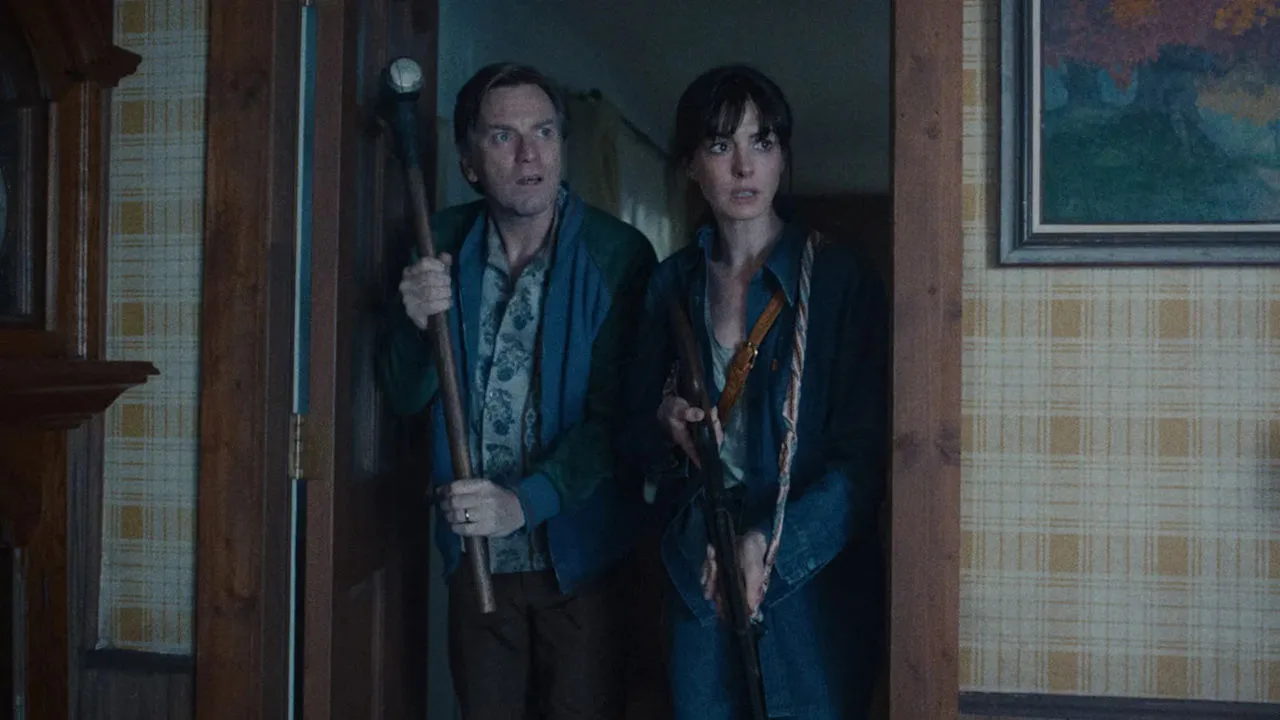
It’s funny how the most Spielbergian film of the year is more so The End of Oak Street than Spielberg’s own Disclosure Day.
Of course, Oak Street’s nostalgia trip-inducing storytelling and setting alone are Spielberg bait for those of us who may have grown up on the likes of E.T., Jurassic Park, and even Close Encounters of the Third Kind. Throw in a good measure of Goonies and Jumanji, and you have yourself what feels like the most classic of summer blockbusters, from an era before movies were entirely valued by tentpole franchise names.
Living up to the aforementioned Spielbergian nature, The End of Oak Street is written and directed by David Robert Mitchell of It Follows fame. Now on his fourth feature film, the director has already amassed a respectable track record of original ideas built around his own writing and execution. There was a time when a film of this nature would have been the norm, and Mitchell’s brought it back in spades–and all in under two hours, no less!
Of course, as tight and competently told the story is, it is bolstered by an exceptionally strong cast including Anne Hathaway, Ewan McGregor, Maisy Stella and Christian Convery. Hathaway, in particular, is both the emotional anchor and protagonist of the narrative, an effective reminder of her sheer presence and intensity as an actress. Stella and Convery are rare instances of teenagers who are both realistic in the given situation without becoming excessively annoying. That said, the only pacing flaw rests in one of their sub-plots–albeit it’s quickly resolved and dismissed, almost like it wholly need not be there and feels a little like a remnant from an otherwise culled character arc.
The strongest element of The End Of Oak Street lies in the film’s refusal to treat its audience as being anything less than intelligent–hopefully a trait that doesn’t punish its box office performance. While it certainly carries producer J. J. Abrams’ fingerprints across it, Oak Street is the rare example of a modern movie that doesn’t concern itself with regurgitated exposition or the minutiae of genre tropes, allowing audiences to exercise a little deductive reasoning.
Unlike the more family-friendly sci-fi adventures of the ‘80s and ‘90s that are clearly the inspiration here, Oak Street definitely feels a lot more suited for adults who may have grown up on that fare over kids. While Jurassic Park and Close Encounters of the Third Kind were by no means entirely kid-friendly, Oak Street does push the violence and shock factor further.

So, while this may be for the kid in you, maybe think twice before bringing your kids with you.
The End Of Oak Street is the epitome of what genre and theatre-going experiences are all about and should definitely be caught in theatres. Also, it’s one of the very rare instances where the price of an IMAX ticket is warranted.